Restoring Mosques in Gaza
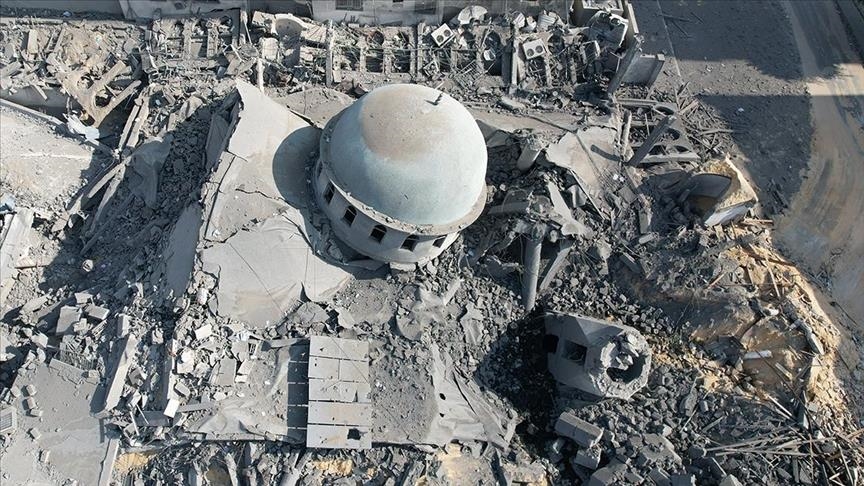
Mosques in Gaza have historically served as the living heart of community life—places where faith, learning, and daily support meet. Beyond their religious role, they function as centers of education, social care, refuge, and unity. Families gather within these spaces not only for prayer, but for guidance, teaching, counseling, and mutual aid. For many neighborhoods, the mosque is where people turn in moments of joy and in moments of hardship—where the community organizes itself, looks after vulnerable families, and keeps a shared sense of identity and belonging.
In Gaza’s densely connected communities, mosques have long helped bridge generations. Elders pass down wisdom and tradition, while young people learn values, responsibility, and service. Lessons in reading, language, and religious understanding often happen alongside community announcements and informal support networks. For some families, the mosque is the first place they seek help when facing financial stress, displacement, or the loss of a loved one. It is where neighbors notice when someone is missing, where people ask about each other’s well-being, and where support can be offered quickly, respectfully, and with dignity.
Mosques also provide structure and calm in daily life. They are places where people can pause, breathe, and regroup—especially during uncertainty. Even outside formal prayer times, they often serve as safe meeting points, spaces for community dialogue, and locations where families can access guidance and reassurance. In many areas, the mosque is as essential as any public service: it helps connect people to resources, strengthens social bonds, and offers a sense of stability that is difficult to replace.
Over the course of recent conflicts, many mosques across Gaza were severely damaged or completely destroyed. Their loss has deeply affected daily life, removing spaces that once brought people together during both celebration and hardship. When a mosque is lost, the community loses more than walls and a roof—it loses a gathering place, a learning space, and a shared refuge. It can also mean the loss of local programs, community support structures, and an important sense of continuity. For neighborhoods already strained by displacement and disrupted services, losing mosques can intensify isolation and weaken the networks people rely on to cope and recover.
The impact is felt in quiet ways as well. Families who once gathered in familiar spaces are forced to disperse. Community programs that offered learning and support may stop entirely or move into less suitable locations. Important moments—like collective prayers, community remembrance, and educational sessions—become harder to hold safely. Many people describe the loss as a break in daily rhythm and in communal life, because the mosque has often been the most accessible and trusted public space in the neighborhood.
This campaign focuses on rebuilding mosques with dignity, safety, and resilience. Our goal is not simply to restore structures, but to rebuild them as secure, durable spaces that can serve communities for generations. Reconstruction is approached with care: assessing structural damage, stabilizing foundations, repairing or rebuilding walls and roofs, and restoring the essential internal spaces needed for community use. A rebuilt mosque should feel safe, welcoming, and strong—able to withstand the challenges of the environment and support regular use over time.
Rebuilding with resilience means emphasizing quality materials and practical design. This includes strengthening structural supports, improving water and sanitation facilities, restoring electricity and lighting, and ensuring safe entry points and circulation areas. Where possible, repairs include better ventilation and improved utility layouts to support comfortable use in all seasons. Attention is also paid to long-term safety standards—so that communities can return with confidence, and so that the space can function reliably as a central gathering point.
A mosque is not only a place of worship; it is also a space where people learn and come together. For that reason, reconstruction plans often include restoring classrooms or learning corners, improving access areas, and ensuring that community members—especially children and elders—can use the space safely. The goal is for rebuilt mosques to support a wide range of community needs: prayer, education, local gatherings, guidance, and support services. In this way, rebuilding becomes a form of community restoration, not only physical reconstruction.
Reconstruction efforts prioritize local labor, providing employment opportunities for builders, engineers, and skilled workers. Through this process, families regain income, stability, and a sense of purpose. Gaza has many capable professionals—construction workers, masons, electricians, plumbers, carpenters, engineers—whose skills are vital for rebuilding. Supporting local labor keeps resources circulating within communities and strengthens local capacity. It also ensures that rebuilding is rooted in local knowledge of materials, climate, and neighborhood needs.
By employing local teams, the rebuilding process does more than restore a building—it helps restore livelihoods. It creates work opportunities at a time when stable income can be difficult to secure. Families supported through employment can better meet daily needs, plan for the future, and regain some control over their lives. This creates a ripple effect: when workers are paid, local markets can recover, services can resume, and households can stabilize. Rebuilding therefore supports both the physical and economic foundations of the community.
The campaign also emphasizes transparency and responsibility in reconstruction. Projects are approached in clear phases—assessment, debris removal and stabilization, structural reconstruction, utility restoration, and finishing work—so that progress can be tracked and communities can see tangible results. Each stage is designed to prioritize safety, durability, and respectful restoration. The intention is to rebuild in a way that honors the significance of the mosque while meeting practical community needs.
Restored mosques help revive surrounding neighborhoods, strengthen social bonds, and provide renewed hope. When a mosque reopens, people often describe it as the return of something familiar and anchoring—an important sign that community life can continue. It becomes a place where neighbors meet again, where educational sessions can resume, and where social support networks can reconnect. This renewed sense of connection can reduce isolation and help communities recover emotionally and socially.
Rebuilt mosques can also become starting points for broader neighborhood revitalization. As one central space returns, nearby services and routines can follow. Families may feel more encouraged to repair homes, reopen small businesses, or rebuild local initiatives. The mosque’s restoration can symbolize the community’s ability to endure and rebuild with dignity. It reinforces the idea that sacred spaces—and the people who rely on them—are worth investing in.
This campaign is rooted in the belief that rebuilding mosques is part of rebuilding community life itself. By restoring these spaces with care and resilience, we help communities regain places where they can gather safely, support one another, and maintain cultural and spiritual continuity. We aim to create spaces that are not only repaired, but strengthened—places that can serve the next generation with stability and dignity.
Every contribution to this effort supports more than construction. It supports education, community connection, and local employment. It helps restore safe spaces where people can find comfort, guidance, and unity. And it helps neighborhoods regain a foundation of daily life—one built on shared strength, mutual care, and hope.
By rebuilding these sacred spaces, we help restore the heart of Gaza’s communities. We help replace loss with renewal, isolation with togetherness, and uncertainty with a path forward. Through careful reconstruction and local partnership, mosques can once again serve as enduring centers of faith, learning, support, and resilience for generations to come.